
At a glance
- Ben Prior is a Capability Leader - Advisory at COSOL with over a decade in reliability engineering across mining operations on four continents.
- Experienced both ends of the maintenance spectrum - from highly proactive, planned environments to reactive, resource-constrained sites
- Uses a maturity framework that assess outcomes, not just processes, to identify what's worth prioritising now
- Focuses on practical, near-term improvements over theoretical best practice - building capability and trust alongside clients.
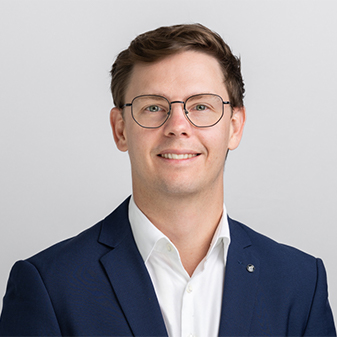
Ben Prior has built his career in places where mining rarely looks the same twice. From the controlled, highly structured environments of Rio Tinto operations in Queensland to remote sites in the Philippines, Zambia, Madagascar, and Canada, his experience has been shaped by constant shifts in conditions, standards, and risk.
Early in his career, he saw what well-planned maintenance and reliable systems could deliver. Moving across continents exposed him to environments where supply chains stretch, equipment behaves differently, and the question each day is not what is scheduled, but what needs to be fixed.
That breadth of exposure is exactly why we sat down with Ben. As part of the COSOL advisory team, he brings a perspective grounded in lived experience across dozens of sites, helping operators understand not just how asset management should work, but what is realistic, achievable, and worth prioritising in the conditions they are actually operating in.
-
-
When you’re moving between countries and sites, how do you acclimatise quickly?
-
What’s an example of something unexpected you needed to know on site?
-
If processes are centralised, do different sites still see different results?
-
Is part of your role coming in to support project work while also building trust with the team?
-
1. When you’re moving between countries and sites, how do you acclimatise quickly?
Ben:
I’ve found that culture shock is usually expected, which actually makes it easier to deal with. When you anticipate it, you adjust more quickly.
The one time it caught me off guard was in the US. I went in expecting less and experienced more, which threw me a bit, especially from a work perspective.
For example, when I first worked on a mine site in Canada, I expected standards similar to Australia, particularly around health and safety, equipment, and operations, but during my time there from 2021 to 2024, I found many of the standards were closer to what I’d seen in parts of Africa. That was surprising.
Overall, I’ve learned not to carry too many expectations. It’s more effective to take each environment as it comes and work with what’s in front of you.
From a professional standpoint, building trust early on site is critical. After working across 20 or 30 different sites, you start to see patterns. You can build credibility quickly by asking practical, relevant questions around understanding PPE requirements, whether double hearing protection is needed near the mills, and any site-specific risks or nuances. Those kinds of questions show you’re paying attention and taking the environment seriously.
2. After working across so many sites, did that approach to asking practical, common-sense questions come naturally, or is it something you developed over time?
Ben:
It wasn’t a conscious decision. It was more about figuring out how to become effective and build trust as quickly as possible in a new environment with new people.
When you arrive on site, you’re there to help, but everyone’s time is limited, so it makes sense to set some ground rules early and make sure you’re not adding unnecessary pressure to the people hosting you, while still getting the job done.
A big part of that is setting expectations upfront. Either before arriving or on day one, I’ll be clear about how much time I’ll need from certain people, how long I’ll be on site, and what I can handle independently.
That way, everyone knows how we’re going to work together, and you can start adding value without disrupting how the site already operates.
3. What’s an example of something unexpected you needed to know on site?
Ben:
Often, it’s the small, practical things that catch you off guard. For example, on a site in Zambia, I was driving to and from camp each day, and we had to be really careful at dawn and dusk because there are impala antelope and guinea fowl all over the roads. Those are the kinds of details you just need to know.
In Madagascar, the environment is a big factor. During the rainy season, it’s very easy to get sick because of the level of bacteria in the air.
In Canada, it was more about adapting to the conditions. Driving in heavy snow before sunrise, with limited visibility, while locals are completely comfortable flying past you, takes some getting used to. You’re focused on just staying on the road.
4. You’ve worked across a lot of different sites and countries. How did that start, and what was it like early on?
Ben:
Earlier in my career, I hadn’t actually worked on that many sites. Before moving into consulting in 2020, I’d only worked on three, although they were across three continents.
It really came down to a lifestyle decision. In my mid-20s, I wanted to travel and work without limiting my career. I looked into FIFO roles, but with only five years’ experience at the time, those opportunities were hard to come by.
So, I focused on finding a role overseas. I applied broadly for about six months and eventually landed a full-time position in the Philippines. I packed up and moved, and that set the direction for everything that followed.
It was a really interesting experience. I was living on a small island called Leyte in the Central Visayas, in a city called Ormoc. To get there, we had to fly into Cebu and then take a three-hour ferry. From the ferry terminal, we were picked up and driven to the house we’d be staying in.
5. Were there any lessons from working across three very different continents and operating environments that helped you move into consulting?
Ben:
The move into consulting itself was quite straightforward. I had stayed in touch with a former colleague from Rio Tinto, who I’d worked with early in my career in Queensland. He had moved into consulting and reached out a few times about opportunities, but the timing never quite worked.
Then COVID happened, and I decided to come back to Australia. I got in touch with him, we caught up, and that led to an interview and the transition into consulting.
It’s something I see across the advisory team as well. The senior people have all spent significant time in mining operations, and that practical experience makes a real difference in how effective you can be.
Working across different environments was a big part of that learning. My first role was at Rio Tinto in Australia, where the standards were high. Equipment was well maintained, systems worked, and breakdowns were relatively rare. Early in my career, I assumed that was just how mining operated.
Then I moved to a plant in the Philippines and realised that wasn’t always the case.
One example that stands out is a conveyor motor replacement. In Australia, we identified bearing wear through vibration analysis, scheduled the change, organised a crane, completed the swap in a day, repaired the motor, and reinstalled it. Everything was planned and controlled.
In the Philippines, the experience was very different. Equipment failures were more reactive, with limited warning or planning. It became a question of what needed fixing that day.
6. Using your Rio Tinto example as a proactive environment, and comparing that to more reactive sites, what’s the difference between a proactive and reactive mindset, and what role do leadership, processes, and tools play in that?
Ben:
It’s never just one thing. It’s a combination of leadership, processes, tools, data, and even the equipment itself.
In the Philippines, for example, some of the challenge started with how the plant was designed and built. The equipment was sourced through a Chinese conglomerate, and a lot of it was effectively lower-performing copies of established brands. That meant the site was already on the back foot from day one.
Then you layer in supply chain constraints. In central Queensland, you can call Caterpillar in Mackay and have parts delivered quickly. In the Philippines, you might be waiting on a bearing to come by boat from Manila, or even internationally. Lead times are long, and if you haven’t set up your spares strategy properly from the start, it becomes a real limitation.
That ties into operational readiness. Having the right spares, maintenance strategies, and data structures in place from day one makes a significant difference. Without that, you’re forced into a more reactive way of working.
Ultimately, the difference between proactive and reactive environments is usually the cumulative effect of all those factors working together.
Madagascar was an interesting contrast. I expected something similar, but it was a large, complex operation with several hundred expats and a few thousand employees overall, representing over 100 nationalities.
It also introduced a different level of operational risk. Beyond mining and processing, there was a power plant and on-site gas production, including hydrogen and hydrogen sulfide.
In typical mining environments, if something fails, you fix it and move on, but in those conditions, a failure can have serious consequences. A hydrogen leak can lead to an explosion, and a hydrogen sulfide leak can be fatal.
7. Have you noticed patterns in how different regions approach risk, maintenance, or decision-making? Has that shaped how you assess a site when you arrive?
Ben:
There’s definitely an element of instinct that develops over time.
But it’s not something we rely on for final recommendations. It’s more about forming an initial hypothesis. You walk into a site, identify what looks like a potential issue, and then validate that with data.
The key is not just proving that something is a problem, but that it’s worth addressing compared to other priorities.
8. Even having that initial hypothesis must speed things up?
Ben:
It does. It also helps when it comes to challenging what you hear on site. With enough experience, you can recognise when something doesn’t quite align with what you’ve seen elsewhere.
That said, one of the more nuanced parts of consulting is balancing that perspective with respect for the client’s knowledge. They understand their business deeply, and that needs to be acknowledged.
The value comes from knowing when and how to challenge constructively, and bringing in a different point of view in a way that adds to the conversation.
When that dynamic works, it works very well. I’ve had clients explicitly ask us to keep challenging them, because they recognise there’s always more to learn.
When both sides approach it with that mindset, open to learning and willing to share perspectives, that’s when you get the best outcomes.
9. Given how different operating environments and their risk profiles can be, is there a practical middle ground where the right level of investment and process delivers the strongest return without overcomplicating things?
Ben:
That’s generally the space we focus on with most of our clients.
One of the things the advisory team prioritises is being practical. It’s about focusing on what makes sense in the short term and what’s going to deliver immediate or near-term return.
In many cases, it comes down to getting the fundamentals right first and building from there.
In environments like the Philippines, the challenge can feel overwhelming. There are so many things that could be improved, it’s difficult to know where to start.
A big part of our role is helping to cut through that complexity. We focus on identifying what matters most, what can be addressed now, and what can wait, so that effort is directed where it will have the greatest impact.
10. How have you developed that lens, and how quickly can your team assess an environment and identify priorities?
Ben:
Working across multiple and often unique sites has definitely shaped how I assess risk.
At the core, every site is focused on production performance, whether that’s tonnes, ounces, or another output. Every asset management decision, whether something is done or not done, carries a level of risk or risk reduction.
Having worked across a range of sites, you start to recognise what works, what doesn’t, and more importantly, why.
Part of how we assess that is through our maturity framework. We don’t just look at whether processes exist, but whether they’re actually delivering results.
We often describe it as practice versus outcomes. Practice is what you say you do. Outcomes are whether it’s delivering real business value.
Some sites have strong practices but limited outcomes. Others have very few formal processes, but strong outcomes driven by experienced teams who know how to get things done. That can work in the short term, but it introduces risk if key people leave or conditions change.
When we build an improvement roadmap, the focus is on addressing the issues that are impacting performance now, while also identifying the areas that may not be a problem today but will become one over time.
It’s about balancing immediate impact with longer-term resilience.
11. What did you study, what roles did you hold on site, and how has that shaped how you work with asset management tools today?
Ben:
I studied Mechanical Engineering and spent my career in mining in reliability engineering roles. I also completed an MBA, which I started just before moving into consulting and finished shortly after.
In terms of tools, it depends on the type. Some of what we use in consulting, like maturity assessment frameworks, aren’t typically developed internally. Most organisations are focused on day-to-day operations and don’t have the time or structure to build something like that themselves.
But many of the core tools we use are standard across the industry, including things like maintenance strategy development and failure mode, effect, and criticality analysis. My understanding of those came directly from working on site, and I’ve built on that in consulting through exposure to a wider range of assets and environments.
Then there are digital platforms, like CMMS and ERP systems like SAP. I’ve had exposure to most of the major systems in the market, both in environments where they’re set up well and where they’re not.
When these systems are implemented properly, they support efficient work management, shutdown planning, budgeting, and cost tracking. They help people focus on the work that matters.
When they’re not, the impact is immediate. Something like budgeting can turn into months of cleaning spreadsheets instead of planning, and that creates frustration and wasted effort across teams.
So, part of the value I bring is technical experience with the tools themselves, but also a practical understanding of what it feels like to work in both well-functioning and poorly structured environments, and how much difference the right setup can make.
12. We’ve discussed both mature and slightly less mature operating sites. How do you add value when you walk onto sites with a mature asset management environment?
Ben:
There’s always an opportunity to improve. The mining industry tends to move in cycles. You’ll see shifts between centralised models, where corporate teams define standards and processes, and decentralised models, where individual sites have more autonomy.
Even within structured environments, there are always gaps between how processes are defined and how they’re executed.
13. If processes are centralised, do different sites still see different results?
Ben:
Yes, they do.
Even with the same standards in place, outcomes can vary depending on how well those processes are implemented and embedded on site.
Our role changes depending on where an organisation is in its maturity journey. With sites that are earlier in that journey, you can make a noticeable impact quite quickly by putting the right foundations in place.
In more mature organisations, the opportunity is often more targeted. There are more stakeholders involved, and change can take longer, but there’s still value in refining processes or improving how they’re applied.
14. Is part of your role coming in to support project work while also building trust with the team?
Ben:
Yes, very much so. We often talk about being aligned with our clients.
Sometimes that looks like leading project work, and other times it’s simply being a sounding board. A customer might reach out and say, we’ve developed a 12-month improvement plan, can you review it? And we’re happy to step in and provide that perspective.
That ongoing engagement is a big part of how trust is built.