
Asset Management Strategy & Standards

Minimise operational disruptions.
Organisations must constantly face imminent issues with their assets whether it is an unexpected breakdown, short asset lifespan or simply the costs of maintaining them.
It is not a matter of when those assets are going to fail, but how much those issues are going to cause disruptions to them.
Asset selection should be set against standards of reliability and excellence. It should be followed up with a strategy that encompasses the process of acquiring assets, considering factors such as suitability for the intended purpose and cost-effectiveness, all while ensuring compliance with regulatory requirements.
By utilising our integrated approach to gain a complete view of the overall health of your organisation’s assets, we have the ability and expertise to identify improvement opportunities, and then realign your maintenance strategy and tactics to sustainably and economically enhance the reliability and productivity of your assets.
Importance Of An Asset Management Strategy
Implementing a robust strategy for managing assets is essential for asset-intensive organisations who want to improved asset reliability, increase operational efficiency, optimise asset lifecycle costs, enhance risk management and, ultimately, make better operational decisions.
An asset management strategy provides a systematic approach to the planning, acquiring, operating, maintaining, upgrading and disposing of assets. The primary goal of the strategy is to optimise the performance, reliability and value of assets throughout each asset's lifecycle, all while reducing risks and costs.
Development of asset management strategies is particularly important for industries that heavily rely on physical assets, such as manufacturing, transportation, utilities and infrastructure.
Importance Of Asset Management Standards
Establishing a set of standards, principles and practices for asset management enables organisations to better manage physical assets throughout the asset's lifecycle by a providing systematic approach to optimising the performance, reliability and cost-effectiveness of assets, while ensuring compliance with regulatory requirements.

Rethinking Digital Asset Management Content

The Significance of Digital Inspections for Efficient Equipment Management
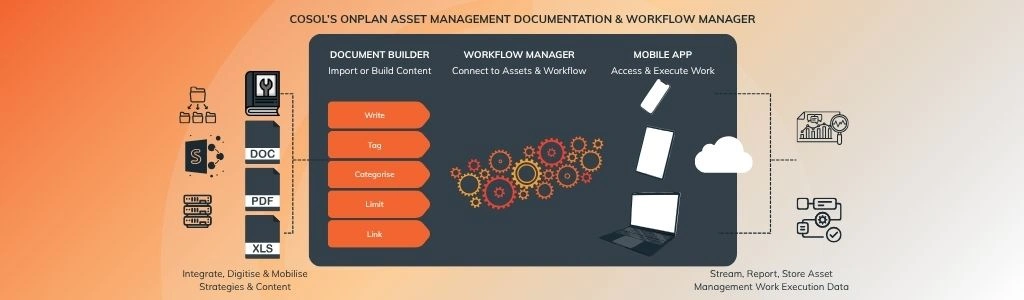
Digitising Asset Management Content?
4 Tips to Boost Your Scale
REALISATION OF COST-BENEFIT
Ensures that your investment in these assets meets your operational needs and will have a long lifespan.
LONG-TERM INVESTMENT PLANNING
Make informed decisions regarding asset acquisition and disposal through efficient allocation of resources.
ENHANCED ASSET PERFORMANCE
Ability to identify asset improvement opportunities.
IMPROVED RISK MANAGEMENT
Proactively mitigate risks and prevent failures to ensure operational continuity.