

At a glance
- Mateo Canarte-Toro, Head of Sales at COSOL Americas, draws on seven years of cross-industry experience to challenge the myth of data readiness
- Poor data quality costs organizations an average of $12.9M per year - and 20-30% of MRO spare parts inventory routinely goes excess or obsolete before anyone acts.
- A crawl-walk-run framework - assess, prioritize ruthlessly, then govern at the point of entry - replaces endless cleanup cycles with measurable near-term progress.
- Sustainable data quality requires executive ownership, data stewards, and validation rules that stop bad records before they enter the system.
Article by Mateo Cañarte-Toro,
Head of Sales | COSOL Americas
I have heard it so many times I stopped being surprised. What I never stopped doing was asking one question back: “ready by what definition?” Nobody ever has a clean answer, and that is the whole problem. “Ready” is a moving target, and chasing it is how a two-year cleanup becomes a four-year one while the business falls further behind than where it started.
So let me say the quiet part out loud: waiting for perfect data is not a neutral decision. It is a financial one, and the meter is running the entire time.
The cost of waiting
Gartner puts the average cost of poor data quality at $12.9 million a year. Read that again. That number does not politely wait for your cleanup project to wrap up before it kicks in. It is draining working capital right now, while your remediation sits on pause.
In MRO spare parts alone, I regularly see 20 to 30% of the inventory on a shelf go excess or obsolete before anyone acts. Holding costs pile up. Reorder points nobody has touched since go-live keep firing off purchase orders. Safety stock levels set five years ago keep tying up cash you could put to far better use.
I have seen both sides. The organizations that move fix what matters most, unlock the working capital, and let the cleanup run in parallel. The ones that freeze everything for a three-year master data project come out the other side worse off, because data does not sit still and wait to be tidied. It ages while you stall.
The lesson, every single time: the best operators do not wait for perfect. They iterate.
Master Data is a 10,000-piece puzzle
I have friends who tackle 10,000-piece jigsaw puzzles for fun. Watch a good one and you will notice they never start by grabbing a random piece from the middle and building outward. That is how you lose an afternoon and your sanity. No scale, no orientation, no idea where anything goes.
They start with the edges.
Build the frame first, because the frame tells you how big the problem actually is. Then they attack the high-visibility clusters, the bright red lighthouse, the one patch with an obvious color, while the frame holds it all together. Then they protect what is built so it does not collapse before the picture comes together.
Spare parts master data is that 10,000 piece puzzle. And most organizations are elbow-deep in the middle of the pile, wondering why nothing fits. So here is the frame: crawl, walk, run.

Crawl
Find the edges

Walk
Build Section Clusters

Run
Lock the Picture

Crawl: Find your edges
“We have a data problem” is not actionable. No leader can fund, prioritize, or champion a sentence that vague. So before you fix anything, size the thing.
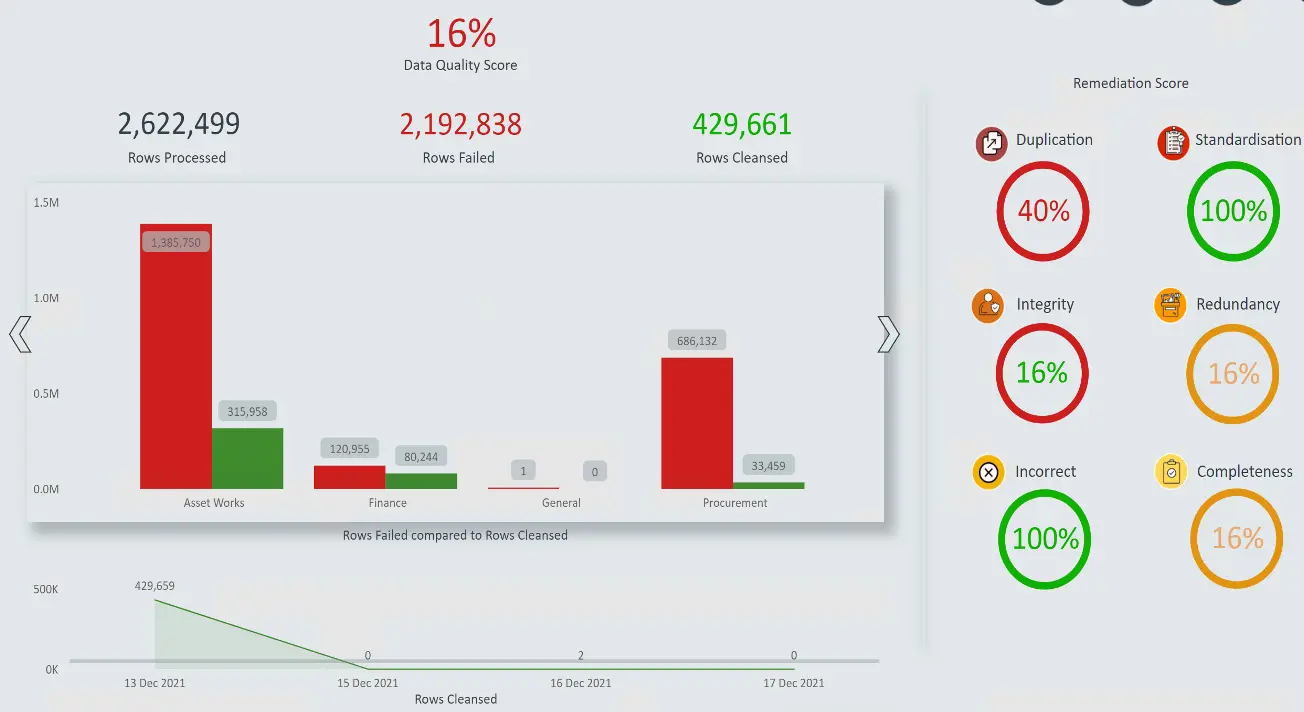
Across our assessments at COSOL, six dimensions define the shape of almost every spare parts data problem:
Duplication
Standardization
Completeness
Integrity
Redundancy
Accuracy
Walk: prioritize ruthlessly, and never delete
You do not govern a $3 gasket the way you govern a $300,000 motor. One you replace on your lunch break. The other takes the plant down. Different risk, different consequence, different financial weight. Apply the same heavy rigor to every line in the catalog and you bury the people entering data in friction, and friction kills compliance before governance ever takes hold. Put the mandatory fields where decisions actually get made. Everything else is drag.
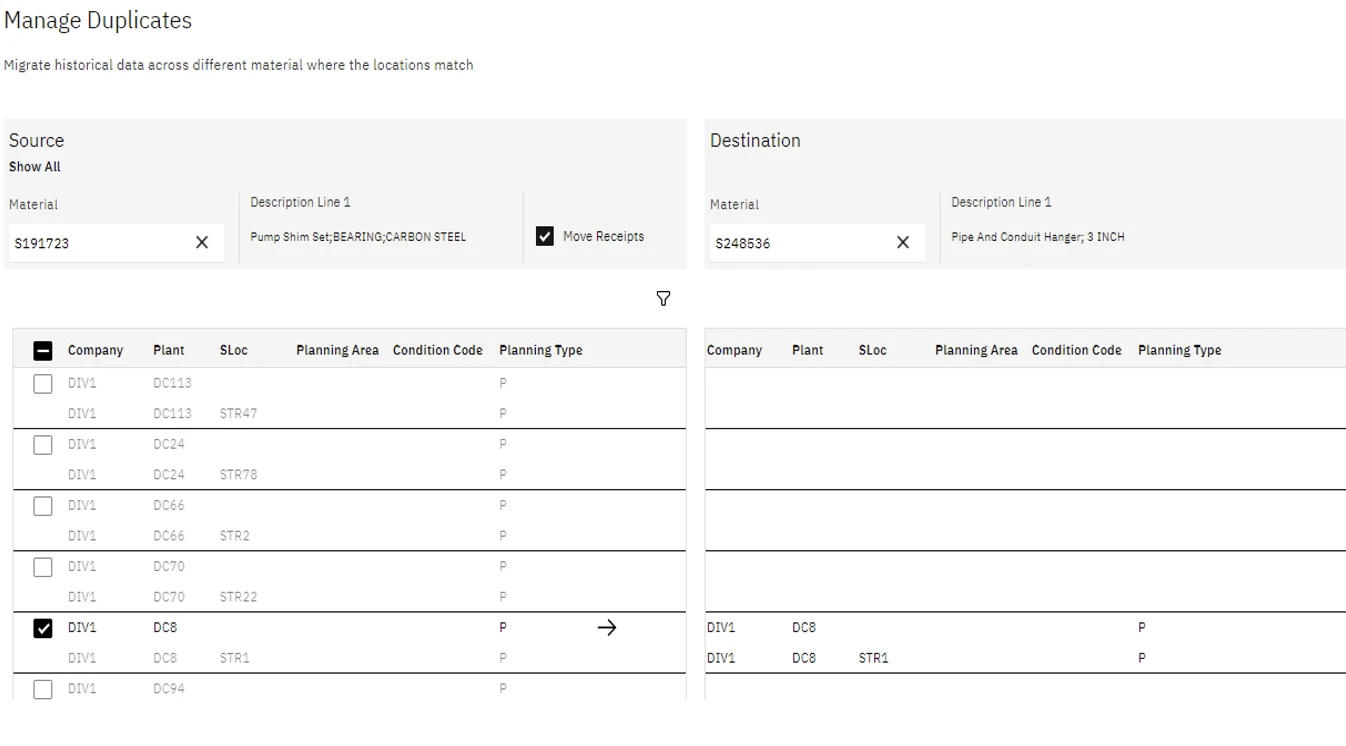
And when you consolidate duplicates, do not delete them. Merge them. BRG 1000 and Bearing 1000 are the same part, but each carries its own purchase history, lead times, and consumption pattern. Keep one, bin the other, and every future optimization decision runs on half the picture. Move the full history into the master record before you archive. Lose nothing.
Run: stop bad data at the door
"Top management shall demonstrate leadership and commitment with respect to the asset management system by ensuring that the asset management policy and objectives are established."
- ISO550001 Clause 1
Four things to take with you
-
Assess before you act. Know the full shape of the problem first.
-
Prioritize ruthlessly, and match your effort to the risk and consequence of each item.
-
Preserve consumption history through every merge and migration. It is the foundation of every smart inventory decision you will make.
-
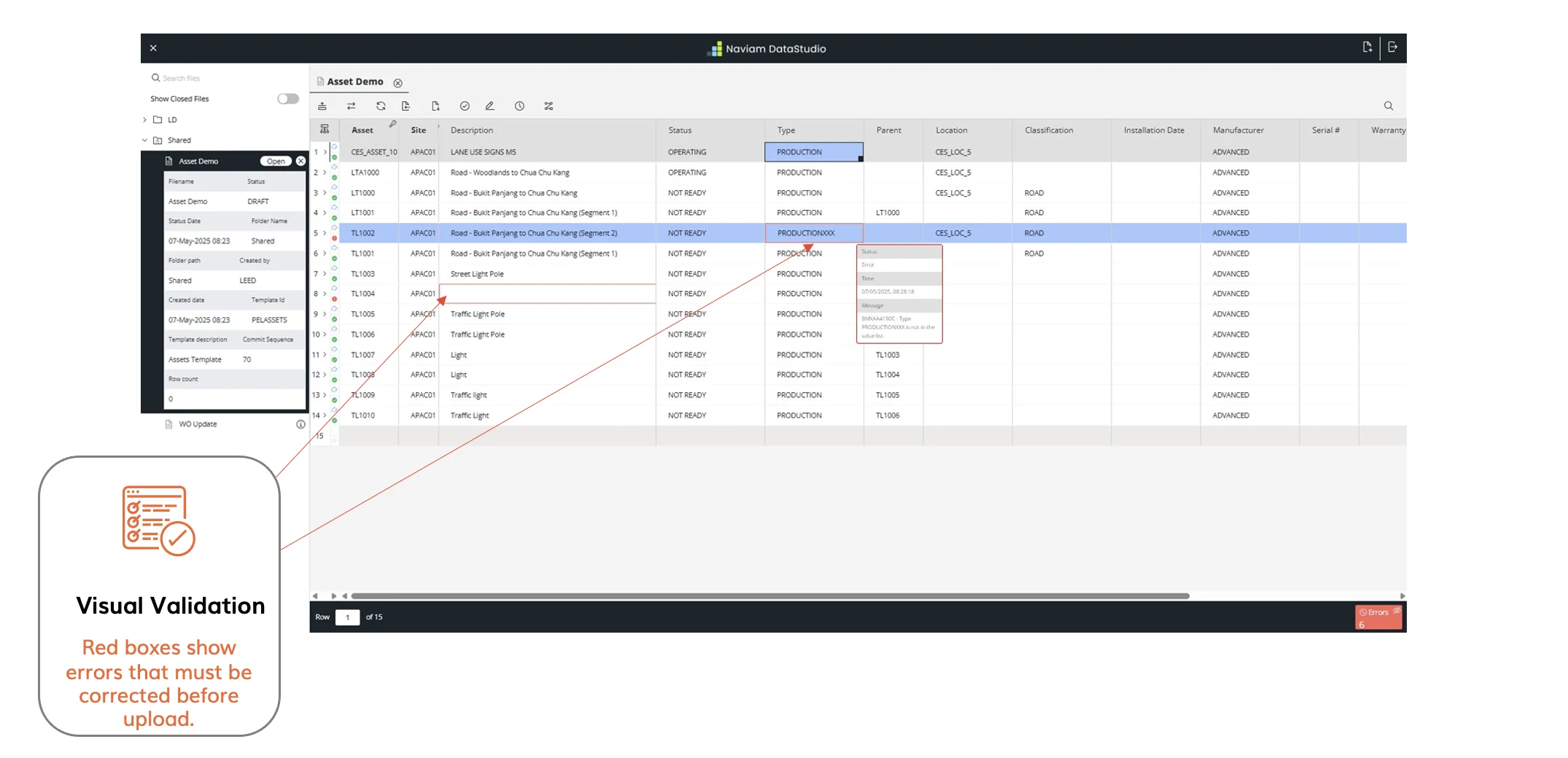
Govern at the point of entry. Clean data comes from keeping bad data out, not hunting it down later.


About Mateo Cañarte-Toro
About COSOL
COSOL is built on one belief: in asset-centric industries, reliability is everything. We’re a trusted, data-led asset management partner for organisations around the world who can’t afford to fail. And known for our deep expertise, dependable delivery, and ability to keep critical assets performing at their best.
The company recently celebrated 25 years in business, are Australian-owned and operated, and recognised as reliable partners by their clients across the globe.