
At a glance
- COSOL's Global Strategic Solution Architect Max Rogers sits down to reflect on 20+ years building and scaling technology businesses across asset-intensive industries.
- Max shares how prioritising people over profit kept AddOns running through lean years - and why his first employee is still with the business today.
- From faxed purchase orders to AI-driven analytics, Max explains why the best technology only creates value when it solves a problem the organisation is ready to face.
- Fresh perspectives, operational experience, and an entrepreneurial mindset are what Max sees as the real drivers of performance in mining, transport, and beyond.
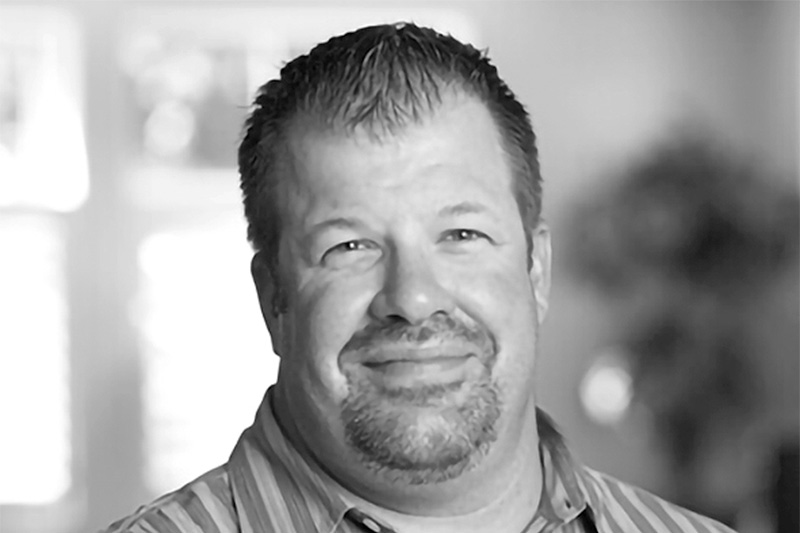
Max Rogers brings more than two decades of experience working at the intersection of technology and asset-centric industries, with a career defined by building, scaling, and advising businesses through periods of change. As the former CEO of AddOns, a company he led for nearly 20 years before its acquisition by COSOL, and now a Global Strategic Solution Architect, Max has spent his career helping organisations solve complex operational and technology challenges at scale.
What sets Max apart is not only the longevity of his experience, but the perspective that comes from having worked across multiple roles, from founder and CEO to customer success leader and solutions architect. His approach is grounded in a clear philosophy: understand the real problem, focus on people, and deliver outcomes that create measurable value. That mindset continues to shape how he works with customers today, particularly in industries where reliability, efficiency, and data-driven decision-making are critical.
1. You built a business that lasted over 20 years and was eventually acquired by COSOL. How has being on the ground floor of technology in mining shaped that success?
Max:
There will always be shifts in technology, and so I believe one key to any longevity or success is how you structure the business.
Throughout our first 15 years, between 2003 and 2018, we had a mix of strong years and difficult one, like most businesses. What kept us going through the leaner or more challenging years was that it was never solely about money.
Our first and second priorities (in no particular order) were our employees and our customers. We had good people, and a very low staff turnover. Our first employee still works with us today. We took care of our people, they took care of our customers, and the money took care of itself.
That’s not to say we didn’t go through rough patches, but that principle always stayed consistent.
2. You’ve said you take care of your people so they can take care of customers. What does that look like in practice?
Max:
It’s a difficult thing to define precisely. For me, it’s about respecting people as much as they respect the business.
That doesn’t always mean financial investment, although that can be part of it. It’s about being invested in their success, caring about them, and understanding what motivates them.
For example, if someone wants to pursue an MBA, we support that. That might mean giving them flexibility with their schedule rather than just financial support.
If someone has an idea they want to explore, we make time for that. Maybe carving out a few hours each week to develop it.
It’s about creating an environment where people can grow, contribute, and feel supported. Being invested in people is probably the best way to describe it.
3. What keeps you motivated now, after so many years in business?
Max:
In 2022, I had my eye on exiting and then I had an accident and sustained a spinal cord injury.
My retirement plans of golfing and travelling the world became a little less within reach and so I have a different perspective on that question now.
Could I exit? Yes. But what would that do to my quality of life? It would go down. I am quadriplegic, so being the dynamic executive I used to be or travelling extensively isn’t really possible, but I’m still able to do meaningful work, and I’m having fun.
This business is fun. It’s not always fun, but solving problems, doing what we do, and growing the business is enjoyable. I wake up in the morning ready to go and I look forward to each day. As long as I’m having fun at work, I want to keep working.
4. What does “fun” in business look like for you?
Max:
It comes down to two things. The first is solving problems for both customers and COSOL and seeing those solutions create real value.
The second is seeing people succeed. I love seeing current employees succeed, and I love seeing former employees succeed as well. At AddOns, we didn’t have much turnover, but when people did leave, it was often because they had outgrown us, and that never bothered me.
5. How have you approached technology adoption in industries like mining and public transport, where changes have traditionally been slower than in other sectors?
Max:
We’ve always focused on bringing technology to our customers in a thoughtful and purposeful way.
As late as 2020, just pre-COVID, we still had customers faxing purchase orders and sending hard cheques. COVID ultimately forced change and reduced a lot of paper-based processes, but there were even a few stragglers after that.
6. That’s an interesting take. When working with clients who are resistant to change, how do you introduce new technology without simply pushing it onto them?
Max:
One of my core principles is understanding what problem we’re solving. If we have the best solution in the world but the customer doesn’t have that problem, then the value isn’t there. And if they don’t realise they have the problem, that becomes an uphill battle.
7. What are the main problems your customers are currently facing?
Max:
One of the big challenges right now is the sheer volume of data. Across asset-intensive industries, there are thousands, if not millions, of data points coming in from equipment, auxiliary systems, and other sources. The problem is figuring out what to do with all that information.
First, where do you store it? Then, how do you use it? This isn’t a new problem, but customers are now starting to recognise it more clearly. There have been studies as recently as 2023 showing that 99% of IoT data goes unused. That’s becoming a major focus for us.
For example, we often see this play out in systems like Ellipse. Over time, these systems evolve with the business. You get legacy configurations, incremental changes, and a bit of scope creep as different requirements are layered in. The result is that the system no longer reflects how the business actually operates today. Processes become misaligned, data structures aren’t consistent, and while a lot of information is being captured, it’s not being used effectively to drive decisions.
That’s typically where we start to engage, making sure the system is aligned to current operations and that the data it holds can actually be used to improve reliability and performance.
8. If that amount of data has gone unused for so long, how do you position it as a problem that needs solving?
Max:
It comes down to what that data can tell you. In asset-intensive industries, reliability is critical. That data can help forecast failures or identify issues before they happen.
For the last 10 to 15 years, equipment has been generating more data than humans can realistically process. Now, with advancements in areas like artificial intelligence, there’s an opportunity to actually make sense of it.
9. From a market perspective, how are mining companies responding to current uncertainty and cost pressures?
Max:
Mining and public transportation are both highly resource-intensive industries.
Historically, the key concerns were input costs like diesel, electricity, or natural gas. In mining, commodity prices are fixed, so profitability depends on how efficiently you can produce. In transit, fares can’t simply be increased to offset costs.
More recently, ESG, environmental and social governance, has added another layer of pressure because beyond the cost of resources, there’s also the environmental cost. This is particularly impacting public transit, where funding can depend on factors like carbon output and energy usage.
It’s an additional dimension that companies are having to manage.
10. How does technology help organisations manage these pressures?
Max:
When it comes to efficiency and cost control, technology and data play a critical role. This applies not just to mining and transport, but to utilities and other infrastructure sectors as well.
I’ve seen this in action. One of our customers had a group of college interns approach them who wanted to analyse their data and apply some AI technology to it to see what new insights they could discover. The customer agreed, even though they already had teams of analysts working on their data.
The two students discovered that a part of the business that had always been seen as a necessary evil that the company was happy to break even on could actually generate revenue. Just by pulling different levers, they realised they could turn that area into a profitable part of the business.
The company ended up hiring those students, first part time and then full time, and built a team around AI-driven analytics.
11. What value do “fresh eyes” bring to a business, especially when processes have been done the same way for years?
Max:
Speaking personally, one of the most valuable things I’ve seen is the ability to compare how different organisations operate.
People tend to develop tunnel vision, especially in industries like mining and public transportation, where there’s a strong tendency to promote from within, which can narrow perspectives over time.
Working across multiple mining companies and transit agencies, you start to see how each one approaches things differently. Fresh eyes bring exposure to different ways of working and you can take something that works well in one place and apply it somewhere else.
We’ve taken practices from mining and applied them to transit. One example is asset utilisation. Many transit agencies weren’t closely monitoring how much their buses or train cars were actually being used. As a result, they often had far more assets than they needed.
In mining, utilisation is critical. You don’t want a multi-million-dollar haul truck sitting idle. Applying that mindset to transit helped organisations optimise their fleets.
12. How has your background in mining shaped the way you approach customers, compared to someone coming from a purely technology background?
Max:
I think it’s important to understand the nuance of the business. Coming from mining, my old boss used to quote Johnny Cash and say he wanted people who had been out in the “mud, the blood and the beer.”
There’s something to be said for being out on a large piece of equipment during a major unplanned outage and experiencing the pressure that comes with it. You still have to prioritise safety, ensure the job is done correctly, and manage the urgency of getting operations back online.
13. Have you seen cases where organisations became complacent and faced consequences, particularly around compliance or funding?
Max:
Yes, particularly in public transportation in the United States. The federal government provides significant funding through the Federal Transit Authority. Several years ago, they introduced a program called “state of good repair,” which required agencies to be more accountable for maintaining the assets funded by the government.
Initially, there were deadlines, but they kept getting pushed back. Some agencies complied early, while others delayed, assuming the deadlines would continue to move.
After four or five years, the government stopped extending those deadlines and began withholding funding from agencies that were not compliant. It created a significant shock across the industry.
Since then, compliance with “state of good repair” requirements has become a major priority, as agencies risk losing funding if they fall short.
14. What did it look like when organisations had to rapidly become compliant, and how did technology support that?
Max:
There was a real scramble. The first step was developing Transit Asset Management, or TAM plans, which had to meet federal standards. Many organisations rushed to get those in place.
We didn’t create many of those plans ourselves, but we worked with partners who did. Where we were heavily involved was in gathering the data required to support those plans.
15. What role has an entrepreneurial mindset played in your start-up to acquisition journey, and how does it align with COSOL’s strategy?
Max:
Before the acquisition, we were a small business of around 40 people, so it was easier to foster that entrepreneurial mindset.
We’ve always actively looked for people who could identify customer problems and develop solutions, even if it wasn’t something we had done before. We didn’t operate from a fixed catalogue of offerings but would look at a problem and say, “We can solve that.” It’s a mindset that takes a lot of flexibility and the ability to move quickly.
Maintaining that mindset becomes more difficult as you grow. There’s a natural tendency to focus on contractual, regulatory, or statutory requirements and stop there, which means it’s easy to become complacent and fall back on doing only what is required.
The trick is that even as a mature organisation, growth depends on continuing to step back and ask, “Is there a problem here we can solve?”
16. Why is that mindset important not just for COSOL, but for your customers as well?
Max:
If you’re only focused on ticking the boxes, customers will trust that you’ll meet those requirements, but over time, they’ll stop bringing you their real problems.
What you want is for customers to trust both that you’ll deliver on the basics and that you can help them think differently. You want them to say, “We’ve got a problem, let’s bring in fresh eyes.” That’s where the real value lies. In our business, the goal is to be a trusted advisor, not just a box checker.
17. Why do asset-intensive industries like mining and transport require continuous adaptation in how they operate and maintain assets?
Max:
Because the environment is constantly changing. In mining, even the equipment itself is evolving. Over the last 30 years, equipment has become significantly larger, which introduces entirely new challenges. The bigger the equipment, the more complex the failures. You can’t apply the same thinking to a large piece of equipment as you would to a smaller one.
Beyond that, extraction methods continue to evolve, and companies are always looking for more efficient ways to operate. In thermal coal, there’s also the reality that many companies see themselves as operating within a limited timeframe. Each one wants to be the last producer standing, which drives a constant focus on efficiency.
In public transportation, the pressures are different but just as dynamic. Ridership patterns change, particularly with the rise of ride-sharing platforms like Uber and Lyft, which have significantly impacted usage in major cities. At the same time, maintenance practices are evolving. Decades ago, working on heavy equipment required minimal computer knowledge. Today, understanding digital systems is essential.
All of these changes mean you can’t simply keep doing things the same way. You have to keep adapting.