

At a glance
- Fragmented data across multiple systems costs organisations thousands per minute in unplanned downtime and excess inventory.
- Asset leaders need integrated solutions to prevent unexpected failures, ensure regulatory compliance, and leverage AI effectively.
- Integrated Asset Reporting delivers 20% inventory reduction and 15% less unplanned downtime through unified data environments.
- Reliable AI-powered asset intelligence requires clean data foundations, expert-designed tools, and human oversight to deliver consistent results.
Article by Craig Lefoe,
CEO of Toustone | COSOL
When every minute of downtime costs thousands and regulatory compliance isn't negotiable, asset-intensive organisations need more than spreadsheets and siloed systems. They need intelligence.
The alarm sounds at 3 AM. A critical conveyor belt has stopped at the mine site, and the maintenance team scrambles to understand why. But here's the problem: the data they need is scattered across 15 different systems, buried in Excel spreadsheets, and locked away in the heads of operators who aren't on shift.
This scenario plays out daily across Australia's mining sites, power plants, airports, and critical infrastructure. While these organisations manage billions of dollars in assets, many are still flying blind when it comes to truly understanding asset performance, predicting failures, and making data-driven decisions.
“The key issue with asset reporting is the same as any kind of reporting," explains Craig Lefoe, "If your data quality isn't right, if your data foundation isn't solid, you'll have problems. You spend too much time building reports instead of analysing them. With over 25 years of experience working with asset-intensive organisations globally, from major mining companies like BHP and Rio Tinto to critical infrastructure operators like WestConnex, COSOL has seen this challenge repeatedly. The solution isn't just another reporting tool. It's what they call Integrated Asset Reporting: a comprehensive approach that transforms fragmented data into actionable intelligence.
THE HIDDEN COST OF ASSET DATA CHAOS
"COSOL works with many systems, SAP, IBM Maximo, Ellipse, and clients often have multiple versions of these. Plus, different assets come from different vendors and perform differently. You need a single environment to report across all of them, otherwise you create duplication and inefficiency." The consequences extend far beyond operational inefficiency. When companies can't demonstrate compliance with maintenance schedules, they face real safety and regulatory risks. If maintenance work isn't recorded properly, there's a genuine question whether it was done at all.
Consider the ripple effects:
- Unplanned downtime that cascades through operations
- Excess inventory that ties up working capital
- Workforce inefficiency from poor maintenance planning
- Compliance failures that create safety and regulatory exposure
- Missed opportunities for performance optimisation
THREE CRITICAL CONCERNS KEEPING ASSET LEADERS AWAKE
1. "I'm concerned about critical assets failing unexpectedly, causing significant downtime."
Unexpected failures don't happen in a vacuum, they're the result of invisible warning signs that weren't detected or acted upon. Traditional approaches rely on scheduled maintenance or reactive fixes, both of which are costly and inefficient.
Integrated Asset Reporting changes this dynamic by providing real-time visibility into asset health and performance trends. Instead of discovering six months later that crucial maintenance wasn't completed, operations teams receive daily alerts when something is missing, behind schedule, or showing signs of deterioration.
"If you can predict when maintenance is needed, you can optimise your workforce too, reduce unnecessary work while still keeping your assets reliable," notes Lefoe.
2. "We are concerned about consistently meeting regulatory compliance and safety standards."
Compliance isn't just about ticking boxes, it's about demonstrating a clear chain of evidence that maintenance, inspections, and safety protocols have been followed. When data exists in multiple systems or, worse, in paper-based processes, this becomes nearly impossible to prove.
COSOL's approach includes AI-driven tools like MDQ (Master Data Quality) that don't just check if data exists, but whether it's been entered correctly and aligns with business processes. These tools provide daily insights that help organisations stay ahead of compliance issues rather than discovering problems during audits.
"For example, if you've maintained a truck but haven't recorded it properly, then technically you're non-compliant," Lefoe explains. "And if there's no record, there's a real question whether the work was done at all. That's a safety risk."
3. "We know we need to be using data and AI to stay competitive, and we are actively looking at ways to get value out of it."
The challenge isn't access to AI technology, it's applying it reliably to asset management scenarios. Many organisations have experimented with AI tools that promise revolutionary insights but deliver inconsistent or unreliable results.
COSOL's integrated approach starts with clean, high-quality data as the foundation, then layers on AI agents that are specifically designed for asset management workflows. These aren't generic AI tools; they're built by asset management experts who understand the nuances of different industries and asset types.
"The AI can handle the 80%, but that last 20% still needs human oversight, that sense check from someone who knows assets," Lefoe explains. "That's how you make AI truly reliable."
BEYOND REPORTING: A PLATFORM FOR ASSET INTELLIGENCE
Speed to Solution
Multi-Tool Integration
Once data is loaded into the platform, it becomes the foundation for multiple asset management tools:
- MDQ agents for continuous data quality monitoring
- AI -powered benchmarking against OEM standards and industry peers
- Conversational AI for natural language data queries
- Predictive Maintenance algorithms that evolve new data
- Strategic planning tools that generate multi-year asset plans
Real-World Validation: Less Downtime, More Value
Let’s take a practical example: A mining company operating in Western Australia manages a large fleet of trucks, loaders, and crushers across multiple sites. Each site uses a slightly different maintenance system. With no unified reporting, they struggle to:
- See which assets are underperforming
- Predict parts demand accurately
- Schedule maintenance teams efficiently
Using Integrated Asset Reporting, COSOL first loads the customer’s existing data into a secure environment. From there, MDQ tools scan for inconsistencies and gaps. Within days, the company begins receiving daily alerts highlighting overdue maintenance, missing entries, and inventory misalignment.
As a result, they are able to:
- Cut unnecessary inventory by 20%, freeing up capital
- Reduce unplanned downtime by 15%
- Improve audit readiness with automatically flagged compliance risks.

THE RELIABILITY ADVANTAGE
Reliable Data
Reliable Data
Reliable Technology
Reliable Advice
STARTING THE JOURNEY: FROM SLIDES TO SOLUTIONS
For organisations ready to move beyond the limitations of fragmented data and manual reporting, the path forward is surprisingly straightforward.
"Start by loading the data - we can assess quality from there," Lefoe advises. "Once it's loaded, we can run MDQ, identify gaps, and start building the reporting, the materials, the benchmarks. It's a structured process, but flexible depending on what the client needs."
The goal isn't just better PowerPoint presentations, it's creating live environments where decision-makers can interact with their own data in real-time. This customer-centric approach transforms how organisations understand and manage their assets.
Integrated Asset Reporting: Unprecedented Speed
✔ Fast access to critical asset performance data
✔ No need to engage analysts in high cost, lengthy projects, or rely on complex manual reporting
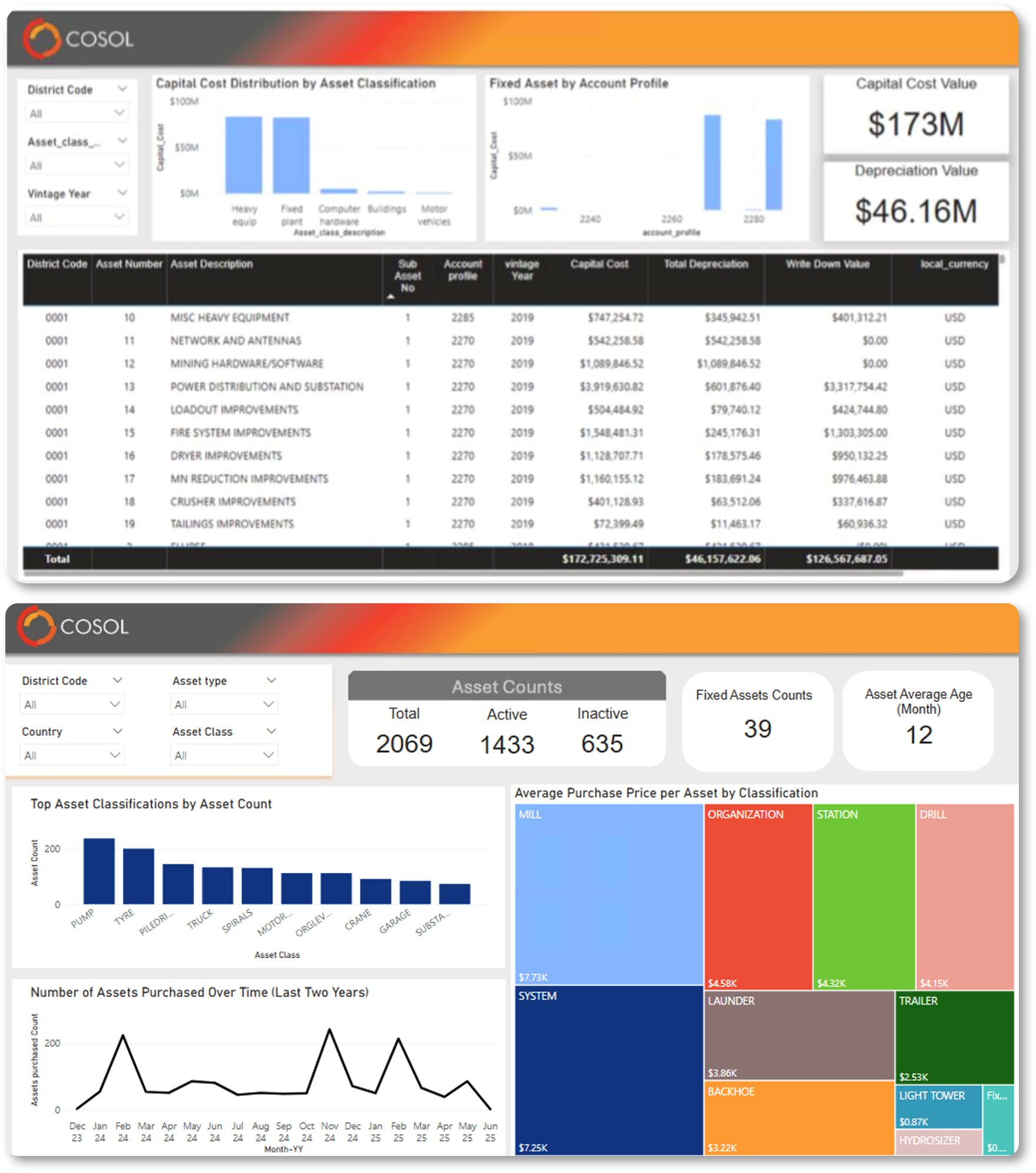
✔ Whether in IBM Maximo, SAP EAM, or Hitachi Ellipse, see your data clearly in an easy-to-use Power BI dashboard
✔ Utilise your existing PowerBI licenses
✔ Standard asset KPIs ready to view out of the box
✔ Option to customise and add new KPIs
✔ Option to add more data sources for richer insights.
THE FUTURE OF ASSET INTELLIGENCE
Looking ahead, the potential extends beyond individual organisational benefits. As more clients adopt integrated reporting approaches, the platform enables industry-wide benchmarking and performance comparison. Organisations can understand not just how their assets are performing against design specifications, but how they compare to industry peers in similar operating conditions.
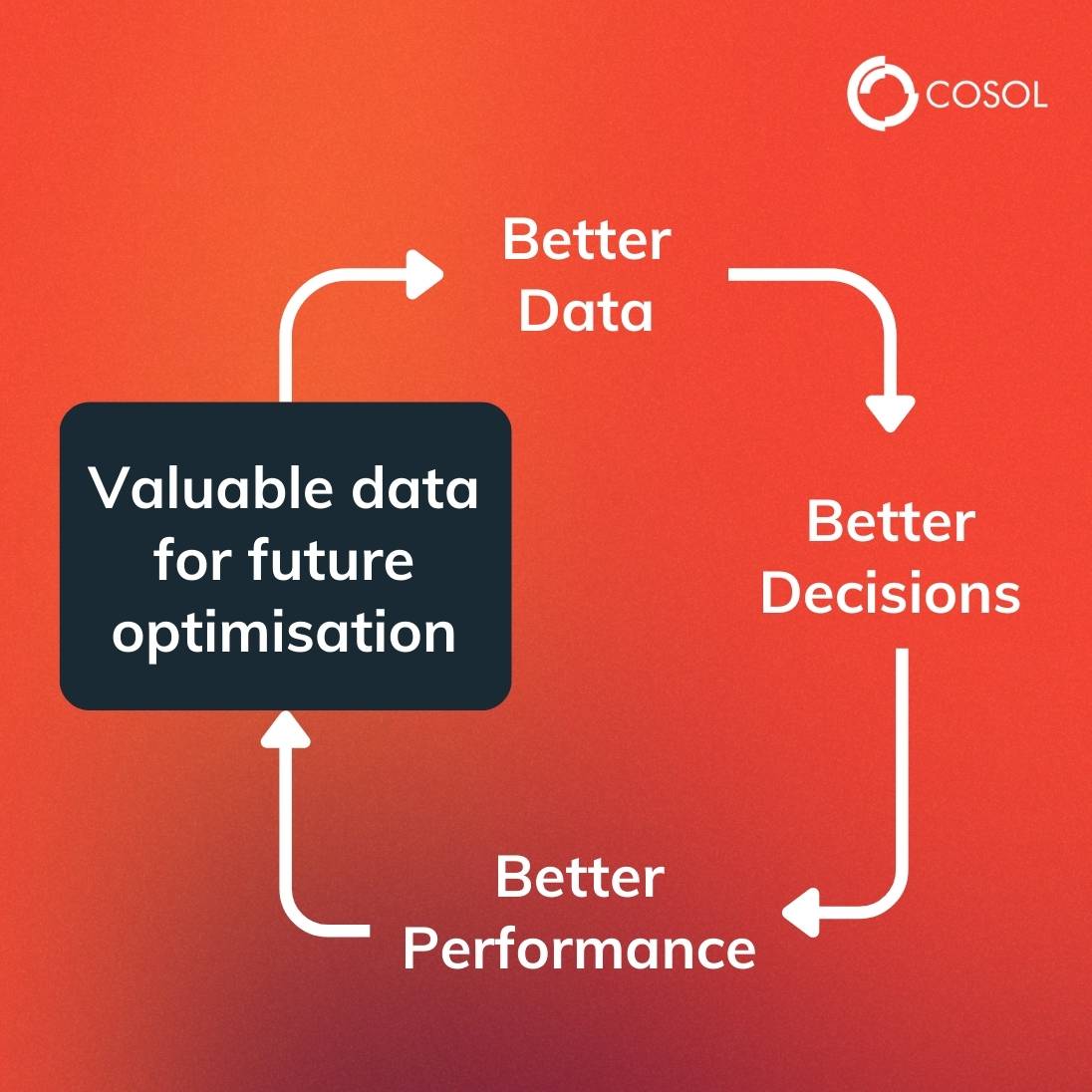
This creates a virtuous cycle: better data leads to better decisions, which leads to better performance, which generates more valuable data for future optimisation.
For asset-intensive organisations in Australia and beyond, the choice is becoming clear. They can continue managing critical assets with fragmented data and reactive approaches, or they can embrace integrated intelligence that transforms how they understand, maintain, and optimise their most valuable resources.
When reliability matters and in asset-intensive industries, it always does, the foundation starts with data you can trust, technology that works, and partners who understand what's truly at stake.
To learn more about how Integrated Asset Reporting can transform your asset management approach, or to see the platform in action with your own data, contact COSOL's asset management experts.

About Craig Lefoe
About COSOL
COSOL is built on one belief: in asset-centric industries, reliability is everything. We’re a trusted, data-led asset management partner for organisations around the world who can’t afford to fail. And known for our deep expertise, dependable delivery, and ability to keep critical assets performing at their best.
The company recently celebrated 25 years in business, are Australian-owned and operated, and recognised as reliable partners by their clients across the globe.